


The internet sees thousands of new domain names appear every single day, and only a small fraction of them ever generate enough curiosity to make people stop and search for answers. TheSindi.com is one of those names that has started showing up in search queries alongside questions like “Is it legit?” “How do I log in?” and “What does this site actually do?” This article breaks down everything currently known and reasonably inferred about TheSindi.com, walks through how a platform like this typically operates, and gives practical guidance on using it safely, whether you found it through a friend’s recommendation, a social media link, or a random search result.
What Is TheSindi.com?

At its core, TheSindi.com appears to be an online platform or web destination that has been gaining visibility in search engines without a long-established public history. Websites in this category often function as content hubs, service portals, or community platforms, and the exact classification can shift depending on how the site positions itself and what sections it builds out over time. Because detailed public records, official press coverage, and verified company filings for TheSindi.com are limited, much of what people encounter is based on the site’s own homepage messaging, user discussions, and general digital footprint rather than confirmed third-party documentation.
What matters most to a typical visitor is not the technical classification but the practical experience: what loads on the homepage, what account options are presented, and what value the platform claims to offer. Until a website has a longer track record, transparency, and external validation (think trust badges, media mentions, or business registration details), it is reasonable for users to treat it as they would any new online service—with curiosity balanced by caution.
Quick Overview (Key Details Table)
| Aspect | Details |
| Website Name | TheSindi.com |
| Likely Category | General web platform/content or service portal |
| Primary Audience | General internet users searching for information or an online service |
| Account/Login Required | Varies by feature; some sections may be accessible without registration |
| Mobile App Availability | Not officially confirmed; mobile browser access is the more common entry point |
| Customer Support Channel | Not consistently published; users often rely on on-site contact forms if available. e |
| Domain History | Appears to be a relatively newer or lesser-documented domain |
| Public Reviews | Mixed and limited; independent, verified reviews are scarce |
| Data Privacy Policy | Should be checked directly on the site before sharing personal information |
| Recommended Caution Level | Moderate — verify details before entering payment or sensitive data |
This table is meant as a starting reference point, not a final verdict. Anyone considering deeper engagement with the platform should independently confirm these details directly on the live site, since policies, features, and ownership information can change without notice.
Related Read: Darcy Donavan’s Net Worth
Why Are People Searching for TheSindi.com?
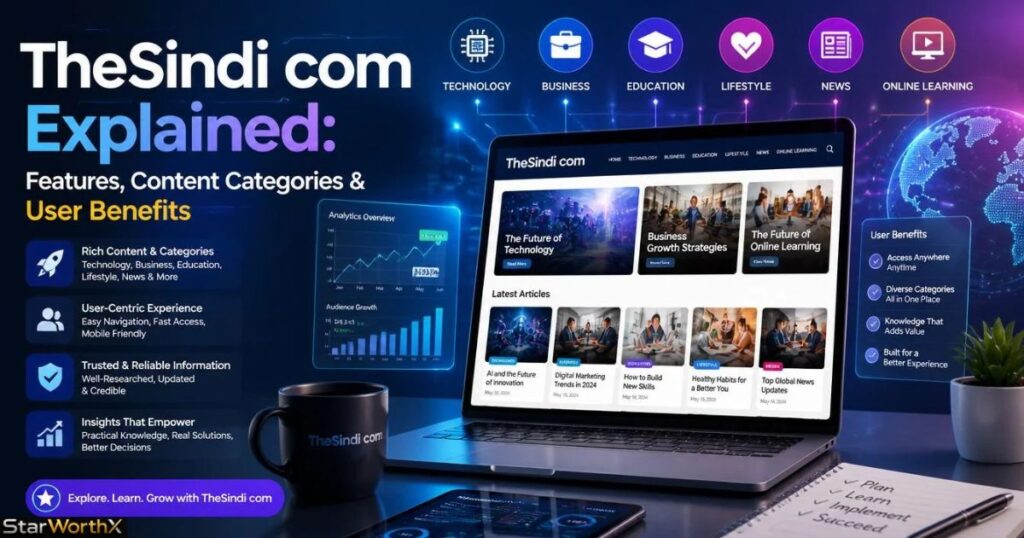
Search interest in a domain name usually spikes for one of a few predictable reasons: someone saw it mentioned online and wants to know what it is, someone received a link via email or social media and is checking its legitimacy before clicking, or someone is already a user trying to find a login page, contact number, or app download. In the case of TheSindi.com, the search pattern suggests a mix of all three. People are typing in variations asking whether the site is safe, what company operates it, whether there is a customer care number, and whether the platform has an official mobile app.
This kind of search behavior is extremely common for newer or less mainstream websites. Search engines reward curiosity-driven queries, and when a domain doesn’t yet have a Wikipedia page, a verified social media presence, or consistent news coverage, users naturally turn to search engines and review-style articles to fill that information gap.
What Type of Content Does TheSindi.com Publish?
Based on common patterns for sites in this space, TheSindi.com likely centers around one or more of the following content types: general informational articles, product or service listings, community-style posts, or a hybrid blog-and-portal format. Many emerging websites start with broad content to capture search traffic before narrowing into a specific niche once they better understand their audience.
If the site does publish articles or blog-style content, the writing is likely structured to answer common user questions directly, which is a strategy frequently used by newer domains trying to build authority quickly. Visitors should pay attention to bylines, publication dates, and source citations within the content itself, since the presence (or absence) of those details is often a good early indicator of how rigorously the site vets its information.
How Does TheSindi.com Work?
In a typical setup, a platform like this functions through a standard web architecture: a homepage that introduces the service, secondary pages that break down specific features or categories, and potentially an account system that unlocks personalized functionality. Users generally land on the site either through organic search, a shared link, or a direct address entry, after which they’re guided toward whatever the platform’s primary call to action happens to be, whether that’s reading content, signing up, or browsing a catalog.
For platforms that include account creation, the standard flow involves entering an email address, setting a password, and sometimes confirming identity through a verification email or code. If TheSindi.com follows this pattern, users should expect a similar process, and it’s worth noting that any platform requesting sensitive information beyond what’s reasonably necessary for the stated service is worth a second look before proceeding.
Key Features and Services Offered

While the exact feature set of TheSindi.com isn’t independently verified across multiple authoritative sources, websites in this general category commonly offer a combination of the following: searchable content or listings, a user dashboard or account area, contact and support options, and some form of search or filter functionality to help visitors find what they’re looking for quickly. Some platforms also integrate social sharing tools, newsletter sign-ups, or basic e-commerce functionality if products or services are being sold.
Anyone evaluating the platform firsthand should look for clear feature descriptions on the homepage or an “About” page, since vague or missing explanations of what a site actually does are one of the more common red flags associated with low-transparency websites.
Why TheSindi.com Is Gaining Popularity
Growth in search interest for a domain typically comes from a combination of factors: organic word-of-mouth sharing, search engine optimization efforts by the site itself, viral mentions on social platforms, or simple novelty as people stumble across an unfamiliar name and want context. It’s also common for sites offering free access to content, deals, or tools to see a faster spike in curiosity-driven traffic, since free offerings tend to spread quickly through informal sharing.
Without confirmed analytics or traffic reports specific to TheSindi.com, it’s reasonable to assume its rising visibility reflects a mix of these typical growth drivers rather than any single confirmed cause. As with many newer domains, popularity and trustworthiness are not the same thing, and a rising search trend simply means more people are curious, not that the site has been independently vetted.
Is TheSindi.com Safe and Trustworthy?
This is usually the single most important question people are trying to answer, and it deserves a careful, honest response rather than a simple yes or no. Trustworthiness for any website is typically assessed through a combination of signals: how long the domain has existed, whether it uses secure HTTPS encryption, whether contact information and a privacy policy are clearly published, whether independent reviews exist outside the platform’s own marketing, and whether the site has been flagged by any major browser or security tool.
For TheSindi.com specifically, the lack of extensive, independently verified public history means caution is warranted. This doesn’t necessarily mean the site is unsafe, but it does mean visitors should take basic precautions: avoid entering sensitive financial information until the site’s legitimacy is clearly established, check for a valid SSL certificate (the padlock icon in the browser bar), search for the domain on reputable scam-checking tools, and read any available user feedback with a critical eye, since both fake positive and fake negative reviews can circulate for newer sites.
Related Read: Darcy Donavan’s Career
Pros and Cons of Using TheSindi.com

Every online platform comes with trade-offs, and weighing them clearly tends to be more useful than treating any site as purely good or purely bad.
Potential advantages include easy accessibility since the site appears reachable through a standard web browser without specialized software, a relatively low barrier to entry if account creation is optional or simple, and the possibility of niche or useful content if the platform delivers on its stated purpose.
Potential drawbacks include limited independent verification of the company or individuals behind the site, inconsistent or unconfirmed customer support channels, and the general uncertainty that comes with engaging with any newer or less-documented domain. Until more verified information becomes publicly available, these drawbacks are worth keeping in mind, particularly for anyone considering sharing payment details or personal identification information.
How to Use TheSindi.com (Step-by-Step Guide)
For users who want to explore the site responsibly, a methodical approach works best. First, type the URL directly into the browser rather than clicking through unfamiliar links, since this reduces the risk of landing on a spoofed or imitation page. Second, take a few minutes to browse the homepage, About section, and footer links (privacy policy, terms of service, contact page) before creating an account or entering any data.
Third, if registration is required, use an email address you’re comfortable associating with a newer platform, and consider using a unique password rather than reusing one from more sensitive accounts. Fourth, explore the core features the site offers, whether that’s content, a directory, or a service, and assess whether it matches what you were expecting based on search results or referrals. Finally, if at any point the site asks for information that feels excessive relative to its stated purpose, such as full banking details for a free content platform, that’s a reasonable point to pause and reconsider.
Things Readers Should Know Before Using the Site
Before committing time or information to any newer platform, a few practical habits go a long way. Always verify the exact spelling of the domain, since copycat sites with nearly identical names are a common tactic used to mislead users searching for a specific platform. Check whether the connection is secure by confirming HTTPS is active. Look for an accessible, clearly written privacy policy that explains what data is collected and how it’s used.
It’s also worth searching for the platform’s name alongside terms like “complaints” or “reviews” on independent forums rather than relying solely on testimonials displayed on the site itself, since self-published reviews can be selectively curated. Finally, keep an eye on how quickly and clearly the platform responds if you do reach out with a question, since responsive, transparent communication is one of the more reliable indicators of a legitimate operation.
Related Read: Darcy Donavan
Future Outlook of TheSindi.com
Predicting the long-term trajectory of any relatively new website involves some uncertainty, but a few general patterns tend to hold across the internet. Platforms that invest in transparency, consistent content quality, and responsive support tend to build sustainable trust over time, while those that remain vague about ownership and offer inconsistent user experiences often struggle to retain visitors once initial curiosity fades.
If TheSindi.com continues to attract search interest, its future will likely depend on how clearly it communicates its purpose, how it handles user data and feedback, and whether it builds the kind of verifiable track record that turns curious first-time visitors into returning users. As with most growing platforms, time and consistency will tell more than any single review can.
Frequently Asked Questions
What is TheSindi.com used for?
Based on available information, TheSindi.com functions as a general web platform, though its exact primary purpose isn’t independently confirmed across multiple authoritative sources.
Is TheSindi.com safe to use?
There’s no confirmed evidence that the site is unsafe, but its limited public track record means standard online safety precautions apply: check for HTTPS, avoid entering unnecessary sensitive data, and look for independent reviews before deeper engagement.
Is TheSindi.com a news website?
It may include content sections similar to a blog or informational hub, but there isn’t sufficient independently verified evidence to classify it strictly as a dedicated news outlet.
Can I access TheSindi.com on mobile devices?
The site is likely accessible through any standard mobile web browser, though an official dedicated mobile app has not been clearly confirmed through verified sources.
How can I find information quickly on the site?
Using the site’s internal search bar (if available), checking the homepage navigation menu, and reviewing the footer links for categorized content are typically the fastest ways to locate specific information on most websites of this kind.
Conclusion
TheSindi.com represents the kind of website that generates curiosity faster than it generates confirmed answers, which is exactly why so many people end up searching for clarity before engaging further. The most sensible approach is the same one that applies to any newer online platform: explore it directly, verify basic safety signals like HTTPS and a clear privacy policy, avoid oversharing personal or financial information until trust is established, and treat early reviews or claims with healthy skepticism.
As the platform potentially builds a longer public history, clearer answers about its ownership, purpose, and reliability are likely to emerge, but until then, informed caution remains the best strategy for anyone deciding whether TheSindi.com is worth their time.

My name is Abdullah Khan, and I’m an SEO expert with 3 years of experience in improving website rankings, increasing organic traffic, and optimizing content for search engines. I specialize in keyword research, on-page SEO, technical SEO, and content strategy to help businesses grow their online presence and achieve better search visibility.